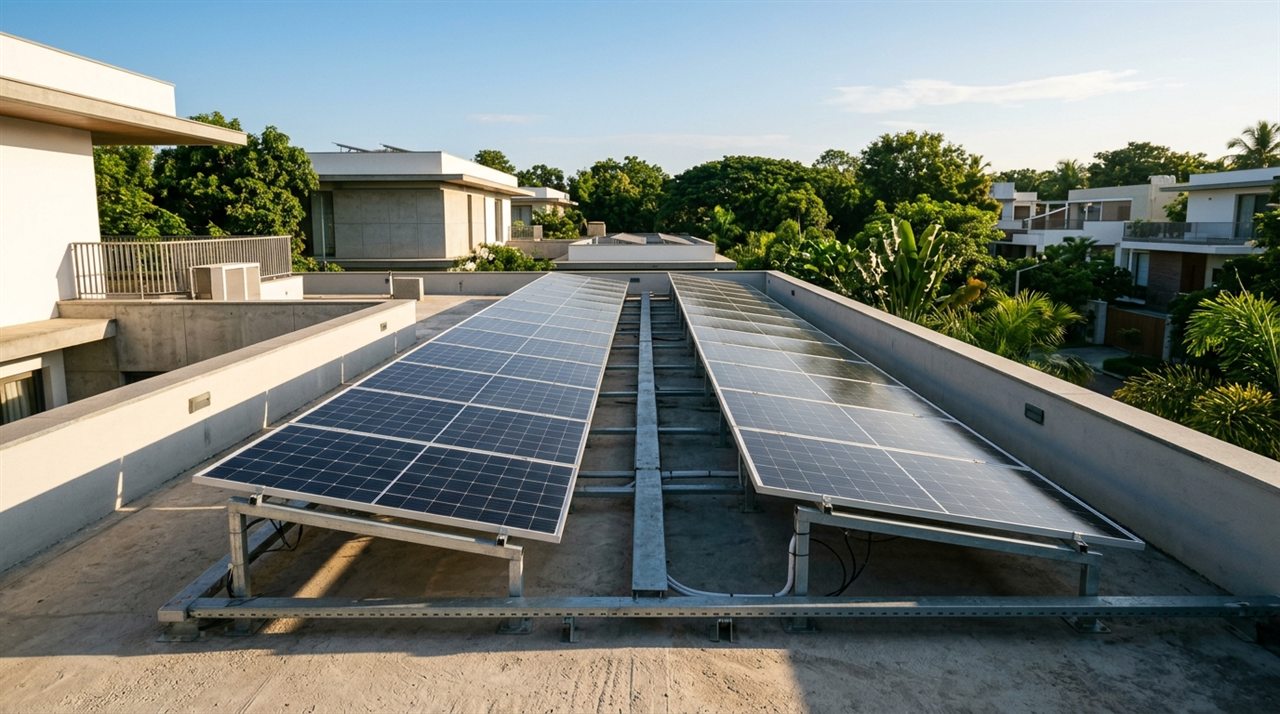
Photovoltaic module technology is rapidly shifting from traditional P-type Mono PERC to advanced N-type TOPCon (Tunnel Oxide Passivated Contact) architecture. For solar buyers across Bihar and West Bengal, choosing the right panel technology directly dictates your 25-year energy yield.
Key Differences: TOPCon vs Mono PERC
TOPCon incorporates an ultra-thin silicon oxide tunnel layer paired with doped polycrystalline silicon, yielding significant performance advantages:
- Higher Efficiency: Commercial TOPCon panels exceed 22.5% to 23.2% module efficiency, compared to 20.8% - 21.4% for standard mono PERC.
- Superior Temperature Coefficient: TOPCon features a low temperature coefficient of -0.30%/°C (vs -0.35%/°C on PERC), producing substantially more kilowatt-hours during scorching May–June summer heat in Eastern India.
- Lower First-Year LID: Eliminates boron-oxygen light-induced degradation (LID), reducing year-one power degradation to under 1.0%.
- Higher Bifaciality Factor: TOPCon bifacial modules reach 80% to 85% rear-side efficiency, extracting higher reflective albedo from light RCC terraces.
Engineering Verdict
While TOPCon carries a modest initial price premium over legacy PERC, its 3% to 5% higher lifetime energy output and better thermal stability yield a superior Levelized Cost of Energy (LCOE).
Common Questions & Direct Answers

Published by Ritesh Kumar
Reviewed for factual solar and PM Surya Ghar accuracy by SRISHTI SOLAR ENERGY — Patna, Bihar & Dankuni, West Bengal. Last updated November 14, 2026.
Always confirm current DISCOM rules, subsidy eligibility, component availability, and written terms directly prior to installation.